
Tove Jansson’s work has inspired me in many areas of my life, and in that, I’m not alone.

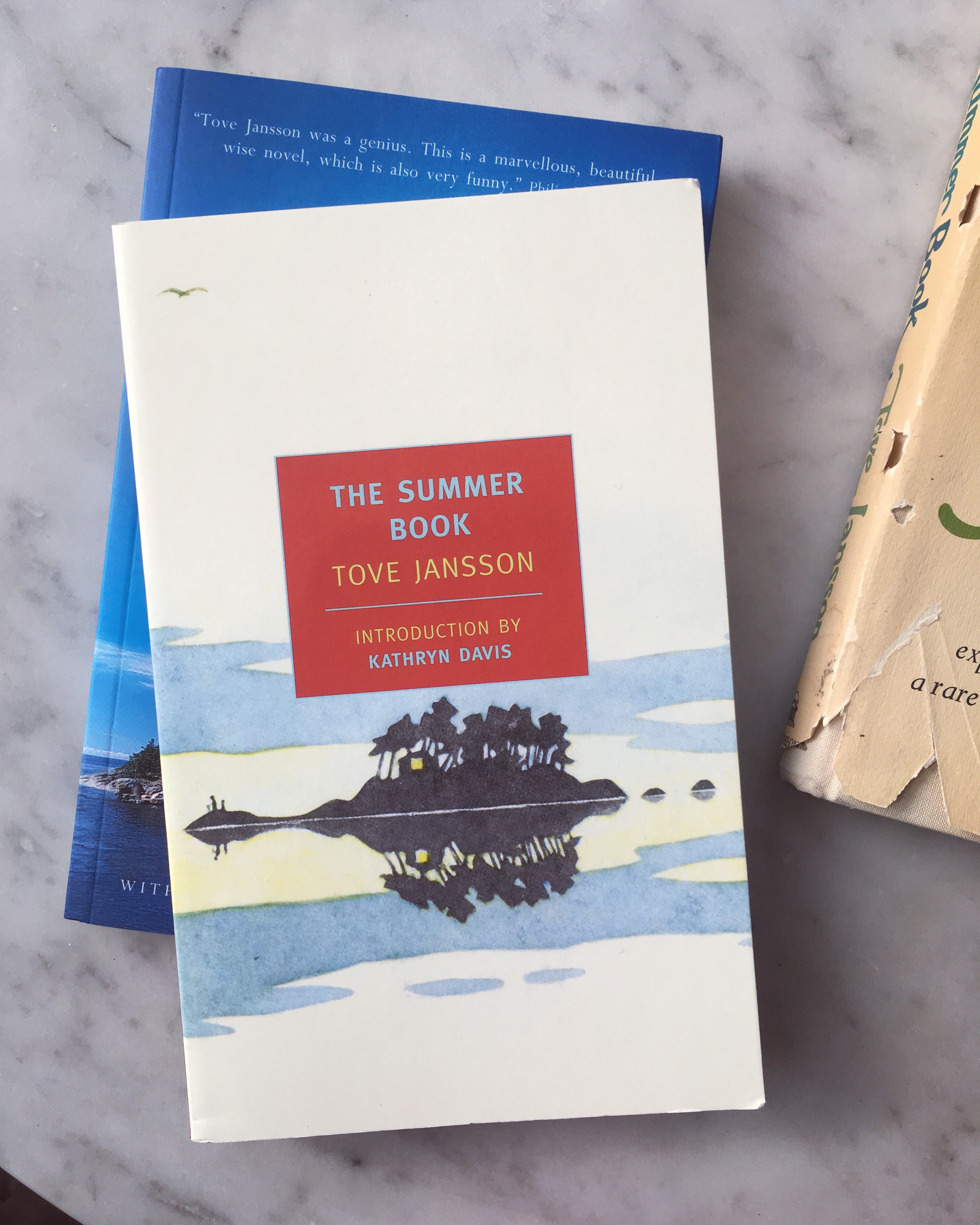
Following my serendipitous discovery of The Summer Book, Tove Jansson’s best-known book for adults, I became fascinated by the world she wrote of.
The world she wrote of and, as it turned out, the world she inhabited.
New York Review Books describes The Summer Book as “the story of Sophia, a six-year-old girl awakening to existence, and Sophia’s grandmother, nearing the end of hers, as they spend the summer on a tiny unspoiled island in the Gulf of Finland.”
Tove Jansson and her partner, graphic artist Tuulikki Pietilä, spent almost 30 summers on Klovharu, an even tinier and more remote island in the same archipelago.
That lonely island in the sea? Well, it was perhaps created less because I didn’t like people than because I did like the sea. And if I am now moving out to an even smaller island out in the Finnish archipelago, it is because I have grown even fonder of the sea.
Tove Jansson quoted in the book “Tove Jansson” by W. Glyn Jones, published in the Twayne’s World Authors Series, 1984.
My fascination with Jansson’s island world turned into an exciting period of research and discovery, which coincided with a time of renewed interest in her work in the English-speaking world (she had died several years earlier, in 2001, at the age of 86). I read every book and article I could find.
I got my first real glimpse of her island life in Islands of Fantasy, a book published by the Tampere Art Museum in 2003 to accompany an exhibit of Jansson’s work by the same name. It came as a revelation. The photos of the island contained in the book, and its themes of solitude and creativity, spoke to me directly — it was as if I had found the kind of language and connection I had been looking for all my life.

I was also given a copy of Moomins at Arabia: Stories in Ceramics 1957–2005, published by WSOY to accompany an exhibition of the Moomin-themed ceramic products produced by Finnish design company Arabia.
Best known among these products are the series of Moomin mugs beloved by fans around the world (these mugs have even inspired a dedicated series of blog posts).
In the kind of story of connection that seems woven throughout Moomin lore, these popular mugs have been designed with great care by ceramic artist and illustrator Tove Slotte since they were first produced almost 30 years ago.
Slotte grew up with the Moomin stories and was often asked if she was named after Tove Jansson. She wasn’t, but writes in Moomins at Arabia that as Tove is not a very common name in Finland, she always felt that something of her destiny lies in the name.
“I considered the Moomins to be holy, almost,” she says in Art of the Line, a documentary about her work on Arabia’s line of Moomin ware.
It’s difficult for me to imagine what kind of life I would’ve had if I hadn’t been making Moomin mugs…It has given me an opportunity to live the way I live.
Designer Tove Slotte in Art of the Line, a documentary about her work on Arabia’s line of Moomin ware.
In Moomins at Arabia, Tove Slotte describes a visit she paid to Tove Jansson early in Slotte’s career. She and her manager, Christel Vaenerberg, met with Jansson and Tuulikki Pietilä in Pietilä’s apartment shortly after Arabia stared to produce Moomin-themed ceramic products.
“When we were leaving,” writes Slotte, “she [Jansson] asked me for my telephone number, and I replied that Vaenerberg really is the one who “holds all the threads in her hands.” Tove Jansson then said very kindly: “But I would like to have your threads as well.”
______________



 Catalogue