Reading and re-reading: Two artists of the everyday

When it comes to reading books, I prefer quality over quantity. And by “quality” I’m referring to an investment of time that lends itself to a depth of understanding and experience.

This colour photograph shows the front cover of a pristine copy of the book Calm Things by Shawna Lemay., published by Palimpsest Press.
Calm Things by Shawna Lemay, published by Palimpsest Press.

The well-worn volumes on my bookshelves reveal my habit of re-reading those books that resonate with me until they physically come apart in my hands.

And at the top of this list are Journal of a Solitude by May Sarton, and Calm Things by Shawna Lemay (in addition to works of poetry, prose and non-fiction, Lemay is the author of the sublime blog Transactions with Beauty).

Themes related to solitude and the struggle to carve out time for creative work are central to both writers, and to both books.

I was so fascinated by the rigorous creative life that fills the pages of Calm Things that I carried this book around with me until it was worn to the point that I had to tape it back together and buy a second copy to use as a back-up.

This colour photograph shows the front cover of a battered and worn copy of the book Calm Things by Shawna Lemay., published by Palimpsest Press.
Well-worn copy of Calm Things by Shawna Lemay, published by Palimpsest Press.

And after my first reading of Journal of a Solitude, I re-read it several times, entry by entry, in a way that made it last all year.

By giving me a window into their lives and creative practices, these writers gave me a tremendous gift — the gift of permission to make room in my own life, without explanation, for the creative pursuits that make me feel most purposeful and fulfilled.

This gift is similar to the gift of unspoken understanding that May Sarton once received from a friend:

Anne Woodson was to have come to lunch today, the only “free day” I shall have for some time to come. When I got back from Cambridge on Wednesday, I walked into a house full of surprises — a hanging fuschia, two marvellous rose plants…and a note from Anne to say that she was giving me a day’s time. (She had come on purpose while I was away.) This is the day she has given me and I have two poems simmering, so I had better get to work.

From Journal of a Solitude by May Sarton

Donuts, pigeons and the art of the everyday

Before the age of cellphones, it would have been a memory.

I might have been tempted to tell people about the somewhat surreal scene I happened upon, but somehow, “I saw two pigeons on the sidewalk pecking at a pink donut” wouldn’t have done it justice.

Because we live in a digital age, I have, by way of a few cellphone photos, a visual story to share. And the story brings to mind Jem Cohen’s 2012 film Museum Hours.

The subject of looking is the central theme of Museum Hours…Cohen suggests that it is not merely looking that matters, but presence — a type of looking that requires quiet and stillness and openness to the unexpected.

From “Jem Cohen’s Museum Hours: A Film with Big Ideas and Small Details

Celebrated as a meditation on the crossings between life and art, Museum Hours tells the story of a gentle, platonic friendship that develops between Johann (played by Bobby Sommer), a guard in Vienna’s Kunsthistorisches Museum, and Anne (played by Mary Margaret O’Hara), a Canadian visitor in town to tend to a cousin who is in a coma in a Vienna hospital.

The film is centred in the Kunsthistorisches, with a focus on Johann’s favourite place in the museum, the Bruegel Room, where he says “you will always see something new.

Sometimes Breugel gives us a world made from the union of the fantastic and the real, so that one becomes the other.

Spoken by the gallery guide in Jem Cohen’s Museum Hours
This colour photograph is of the painting titled "The Fight Between Carnival and Lent," produced by Pieter Bruegel the Elder in 1559.
The Fight Between Carnival and Lent (1559), Pieter Bruegel the Elder (Photo: public domain, via Wikimedia Commons)
This colour photograph shows a detail from the painting "The Fight Between Carnival and Lent," produced by Pieter Bruegel the Elder in 1559.
“Discarded playing cards, a bone, a broken egg.” –Johann in the film Museum Hours. Detail from The Fight Between Carnival and Lent (1559), Pieter Bruegel the Elder (Photo: public domain, via Wikimedia Commons)

Cohen (and Johann) deftly and thoughtfully juxtapose details from the museum’s paintings, such as a broken eggshell, with shots of similar imagery from Vienna’s modern city streets — a discarded cigarette butt, a beer can.

As Johann and Anne venture out and start to take in the entire city as if it were a gallery, this juxtaposition draws parallels between past and present; between the sanctity of the art museum and life in the city that surrounds it.

It takes a certain way of looking to find points of familiarity and connection in the medieval chaos of a Breugel painting, as Johann does.

And in the middle of a bustling city, it can be a challenge to find the space required to stay open and attuned to unexpected scenes.

The quiet space that I inhabited as I watched the pigeons eat their donut might explain my link between these avian friends and Jem Cohen’s film. So might the fact that the scene wouldn’t look out of place in a Breugel painting.

But I believe it is best explained through Cohen’s themes of transience, transcendence and connection — between lonely individuals, between street and gallery, and across time.

______________

Official trailer for Jem Cohen’s Museum Hours:

The poetry of light

I’ve mentioned before that my favourite thing about the creative process is the way unexpected connections are made. I experienced this very phenomenon yesterday during my afternoon painting class at the Toronto School of Art.

This colour photograph shows a beam of light falling over an artist's studio space.
Studio at the Toronto School of Art, 2019.

I was working next to the window, preparing the boards I planned to paint, when I sensed a shift in the early spring light. Sure enough, the next thing I knew, my table was illuminated.

This beautiful light came and went a few times, and so did I. On my way back from filling my water jars, I met it at just the right moment, and was transported in time to the work of Danish painter Vilhelm Hammershøi (1864 – 1916).

The predominant themes of his art – loneliness, isolation, and alienation…and a sense of contemplation and quiet serenity – continue to appeal to a very large contemporary audience.

Profile of Vilhelm Hammershøi on the SMK website
This colour photograph is of Vilhelm Hammershoi's painting "Dust Motes Dancing in the Sunbeam" by Vilhelm Hammershøi , from 1900.
“Dust Motes Dancing in the Sunbeam” by Vilhelm Hammershøi, 1900 (Photo: public domain, via Wikimedia Commons).

I had the privilege of seeing Painting Tranquility: Masterworks by Vilhelm Hammershøi when it was on at the Art Gallery of Ontario a few years ago, and I remember being captivated by his expression of light, and by the aching yet reassuring sense of silence and timelessness in his work.

I can only describe it as poetry.


Cafe culture and blog photography

The thing I love most about the creative process is the way unexpected connections are made. And even if my blog photography doesn’t constitute high art, there is an art to capturing photographs that express the tone and feeling of what it is you’re trying to say.

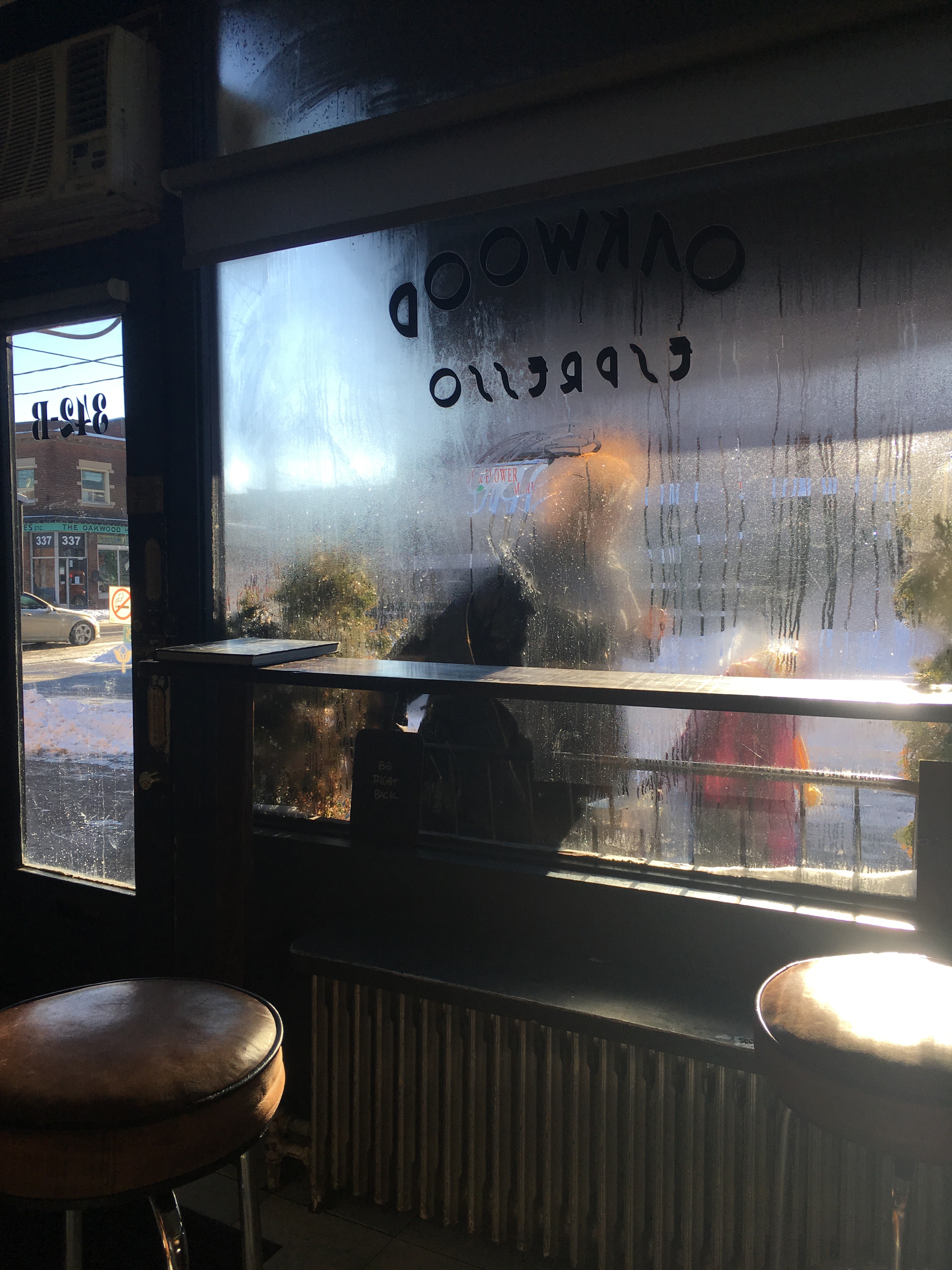
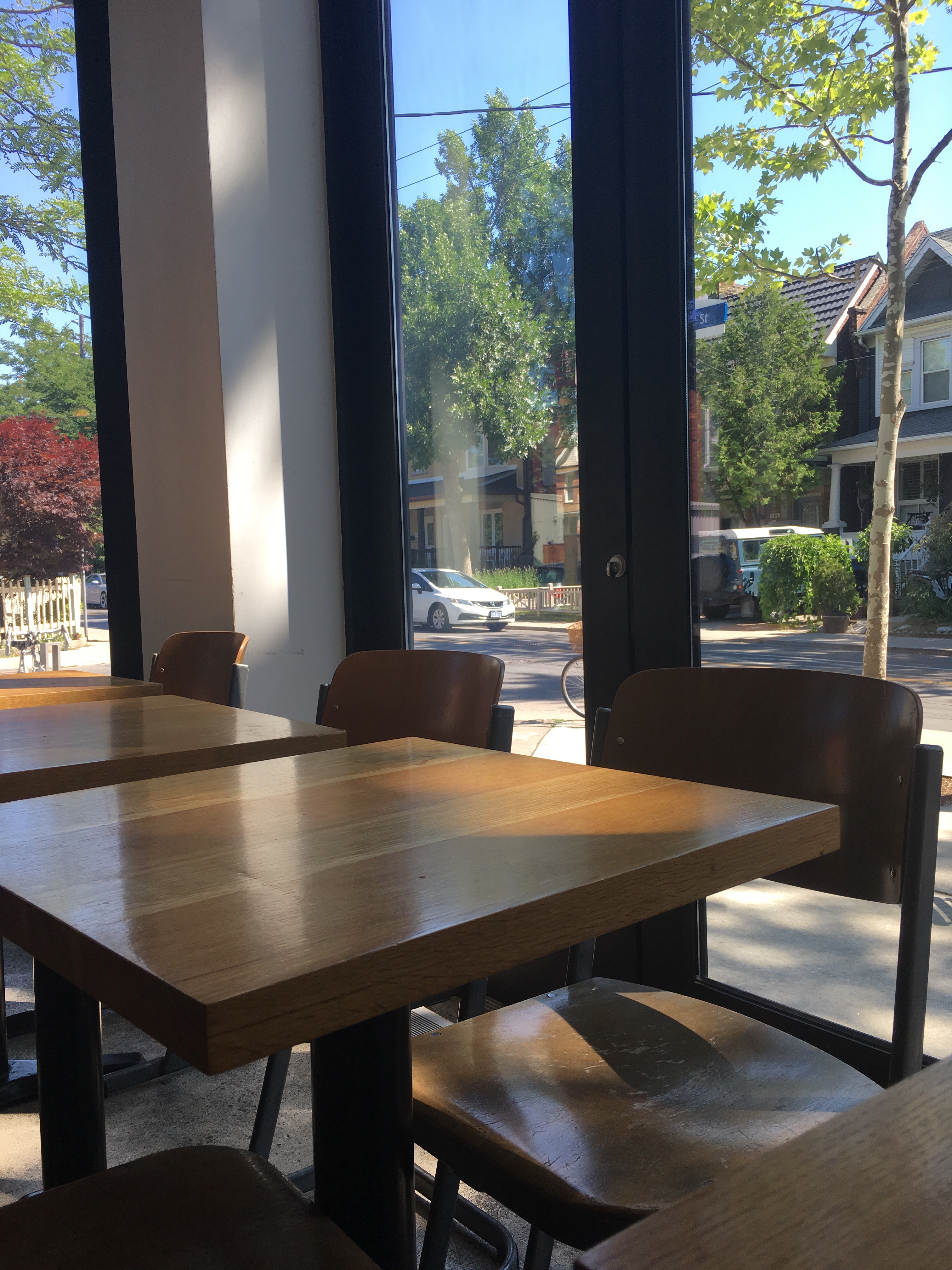
Toronto’s Oakwood Espresso

It recently came to me that, to date, I have taken all but one of the photos for this blog at three of my favourite cafes.

In choosing these locations, I was looking for the magical quality of light that fills those large cafe windows, and the textured surfaces and tables that work so well in the background.

I was also seeking places that were familiar to me, where I would find a sense of quiet and calm.

“I began looking for what I had to say where I usually find it: in what William Carlos Williams called ‘the local,’” writes acclaimed photographer Sally Mann in her memoir, Hold Still.

And to describe what he meant by “the local,” poet William Carlos Williams wrote, “I was determined to use the material I knew.”

What Williams termed “the local,” Mann calls “the everyday and ordinary.” Both are speaking of an approach to the creative process in which the scenes and objects of day-to-day life inform the artist’s work through a practice of close and careful attention.

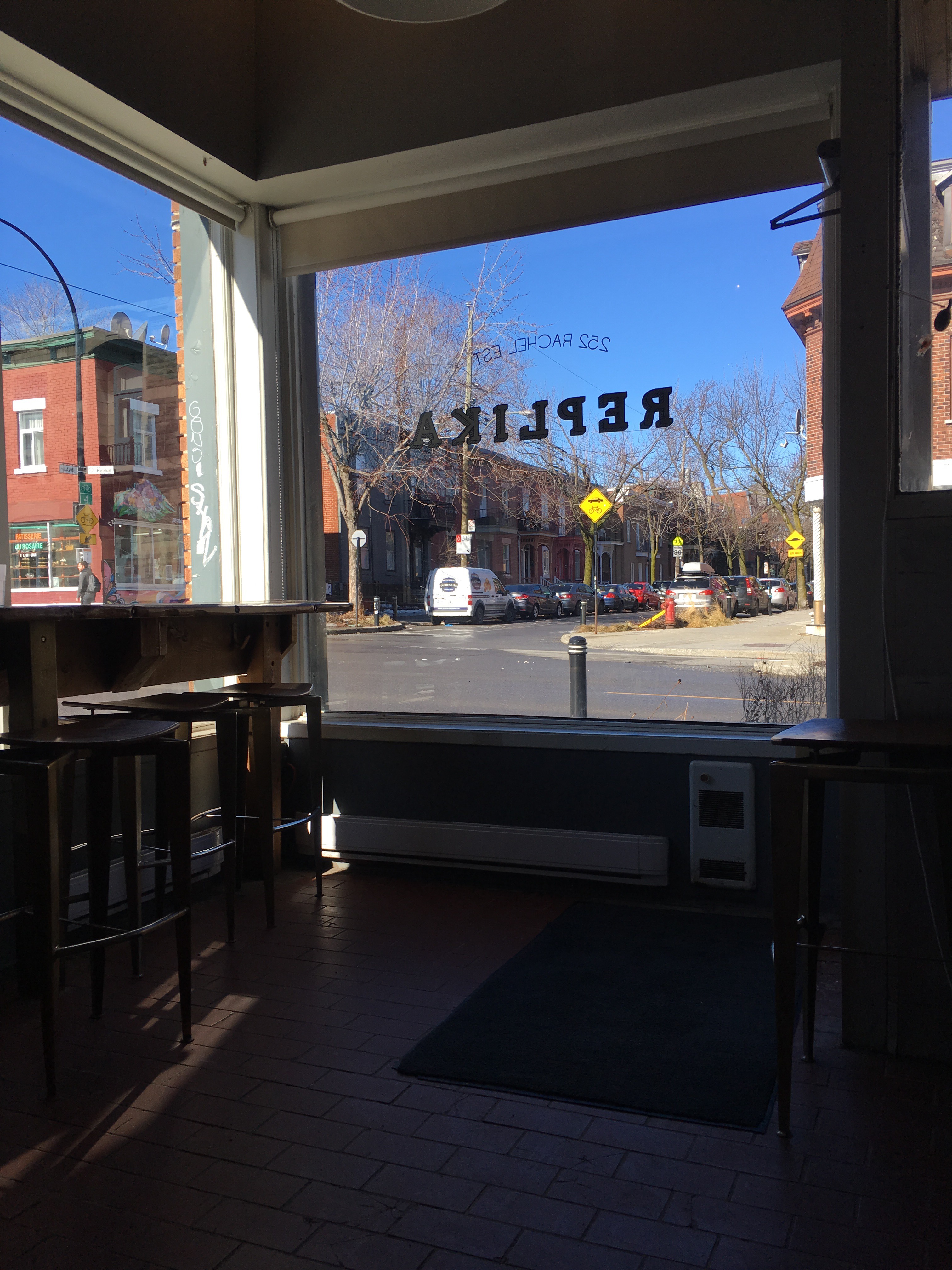
Of the photographs that follow, the “window shots” of the cafes I visited were taken long before I began writing this blog. I was well acquainted with the light and ambience of each location, so I happily made use of the material I knew.


1. Cafe Replika, Montreal

The book photos taken at Cafe Replika appeared in the post Tove Jansson: A story begins.


2. Oakwood Espresso, Toronto

The book and interior photos taken at Oakwood Espresso appeared in the post Discovering the work of Tove Jansson.


3. Contra Cafe, Toronto

The mug photo taken at Contra Cafe appeared in the post Tove Jansson: Books and beyond.

Tove Jansson: Books and beyond

Tove Jansson’s work has inspired me in many areas of my life, and in that, I’m not alone.

This black-and-white photograph shows a page from the book Islands of Fantasy, published by the Tampere Art Museum. It features a photograph of Tove Jansson's cabin on her island Klovharu.
My first glimpse of Tove Jansson’s island, Klovharu, pictured in the book Islands of Fantasy, published by the Tampere Art Museum.

Following my serendipitous discovery of The Summer Book, Tove Jansson’s best-known book for adults, I became fascinated by the world she wrote of.

The world she wrote of and, as it turned out, the world she inhabited.

New York Review Books describes The Summer Book as “the story of Sophia, a six-year-old girl awakening to existence, and Sophia’s grandmother, nearing the end of hers, as they spend the summer on a tiny unspoiled island in the Gulf of Finland.”

Tove Jansson and her partner, graphic artist Tuulikki Pietilä, spent almost 30 summers on Klovharu, an even tinier and more remote island in the same archipelago.

That lonely island in the sea? Well, it was perhaps created less because I didn’t like people than because I did like the sea. And if I am now moving out to an even smaller island out in the Finnish archipelago, it is because I have grown even fonder of the sea.

Tove Jansson quoted in the book “Tove Jansson” by W. Glyn Jones, published in the Twayne’s World Authors Series, 1984.

My fascination with Jansson’s island world turned into an exciting period of research and discovery, which coincided with a time of renewed interest in her work in the English-speaking world (she had died several years earlier, in 2001, at the age of 86). I read every book and article I could find.

I got my first real glimpse of her island life in Islands of Fantasy, a book published by the Tampere Art Museum in 2003 to accompany an exhibit of Jansson’s work by the same name. It came as a revelation. The photos of the island contained in the book, and its themes of solitude and creativity, spoke to me directly — it was as if I had found the kind of language and connection I had been looking for all my life.

This colour photo shows a pink mug on a cafe table. The mug features the Moomin character Too-ticky.
My favourite Moomin mug, featuring the wise and pragmatic Too-ticky as she appears in Moominland Midwinter.

I was also given a copy of Moomins at Arabia: Stories in Ceramics 1957–2005, published by WSOY to accompany an exhibition of the Moomin-themed ceramic products produced by Finnish design company Arabia.

Best known among these products are the series of Moomin mugs beloved by fans around the world (these mugs have even inspired a dedicated series of blog posts).

In the kind of story of connection that seems woven throughout Moomin lore, these popular mugs have been designed with great care by ceramic artist and illustrator Tove Slotte since they were first produced almost 30 years ago.

Slotte grew up with the Moomin stories and was often asked if she was named after Tove Jansson. She wasn’t, but writes in Moomins at Arabia that as Tove is not a very common name in Finland, she always felt that something of her destiny lies in the name.

“I considered the Moomins to be holy, almost,” she says in Art of the Line, a documentary about her work on Arabia’s line of Moomin ware.

It’s difficult for me to imagine what kind of life I would’ve had if I hadn’t been making Moomin mugs…It has given me an opportunity to live the way I live.

Designer Tove Slotte in Art of the Line, a documentary about her work on Arabia’s line of Moomin ware.

In Moomins at Arabia, Tove Slotte describes a visit she paid to Tove Jansson early in Slotte’s career. She and her manager, Christel Vaenerberg, met with Jansson and Tuulikki Pietilä in Pietilä’s apartment shortly after Arabia stared to produce Moomin-themed ceramic products.

“When we were leaving,” writes Slotte, “she [Jansson] asked me for my telephone number, and I replied that Vaenerberg really is the one who “holds all the threads in her hands.” Tove Jansson then said very kindly: “But I would like to have your threads as well.”
______________

Ceramic artist Tove Slotte talks about her work on Arabia’s Moomin mugs:

Discovering the work of Tove Jansson

I would love to weave a quaint little tale about how I first discovered Tove Jansson’s work in a charming independent bookstore, but that isn’t how the story goes.

This colour photo shows the inside of the eclectic coffee shop, Oakwood Espresso.
Oakwood Espresso, one of the top 50 independent coffee shops in Toronto.

I did, though, take photos for this post at Toronto’s Oakwood Espresso, a charming independent coffee shop. So I’ll start with a picture of this beloved local meeting place to shore us up for a dive into the world of big-box chain bookstores.

I was living in Oxford, England, and working at Oxford University Press, when I encountered Tove Jansson’s work for the first time.

Although I’ve been a keen reader since childhood, I had never heard of her — I wasn’t even acquainted with the internationally renowned Moomin series of children’s books for which she is best known.

Toward the end of one of my Saturday meanderings through Oxford — a city with no shortage of beautiful bookstores — I found myself, for reasons I can’t explain, wandering into the nondescript big-box Borders Books.

A masterpiece of microcosm, a perfection of the small, quiet read.

From Ali Smith’s Guardian review of The Summer Book
This colour photograph shows the 2003 edition of The Summer Book published by Sort of Books. The cover features a photo of a tiny island.
Published by Sort of Books in 2003.

I had just passed the line of impatient customers waiting at the checkout when I spotted, dotting the end of a heavy, industrial-sized bookcase, what looked like a series of bright blue jewels. I was drawn to them like a magnet.

The jewels turned out to be copies of the 2003 reissue of The Summer Book, published by Sort of Books two years after Jansson’s death (she died in 2001 at the age of 86).

As Sort of Books so aptly describes, The Summer Book book is the story of “An elderly artist and her six-year-old grand-daughter [as they] while away a summer together on a tiny island in the Gulf of Finland. As the two learn to adjust to each other’s fears, whims and yearnings, a fierce yet understated love emerges – one that encompasses not only the summer inhabitants but the very island itself.”

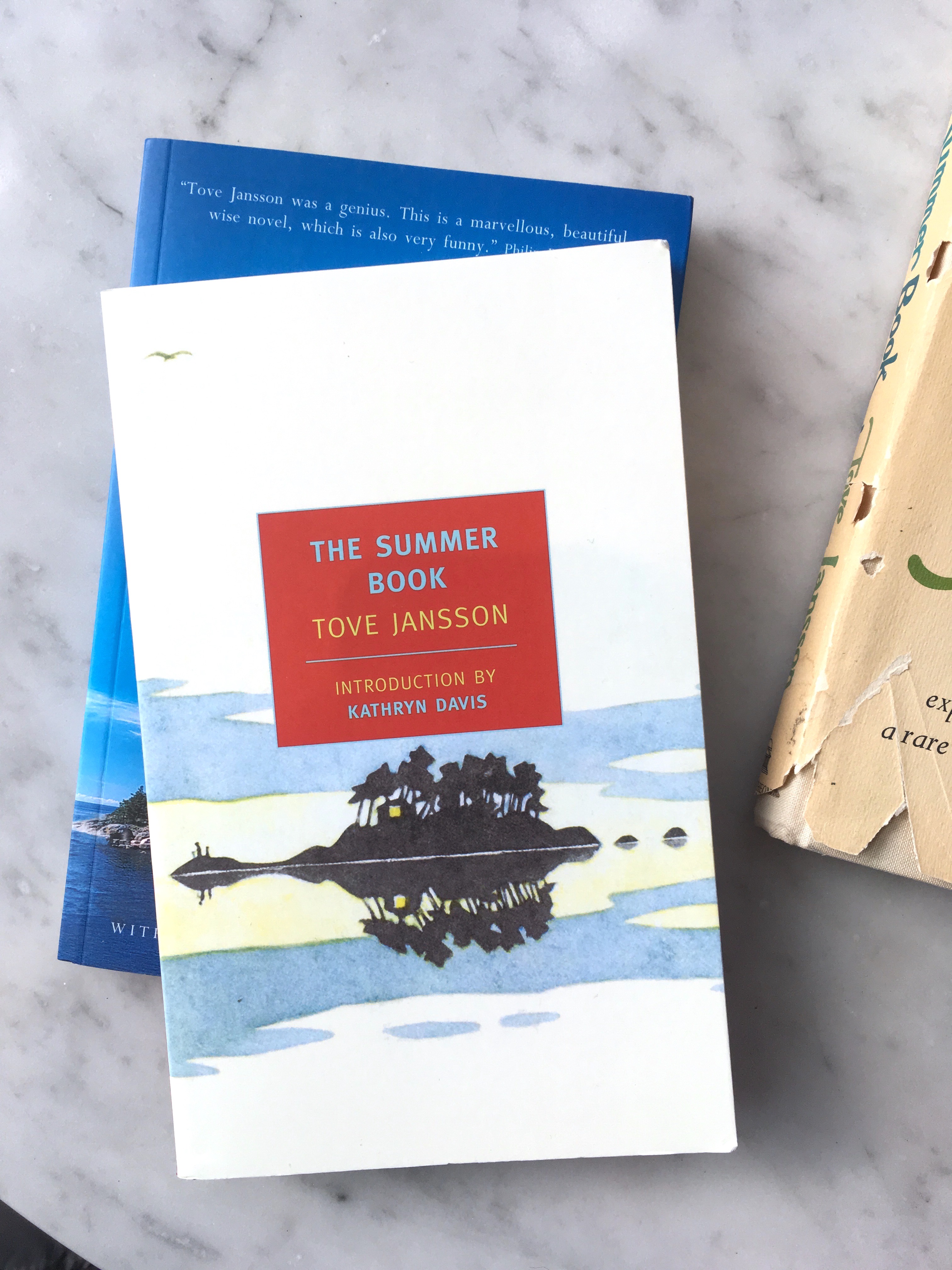
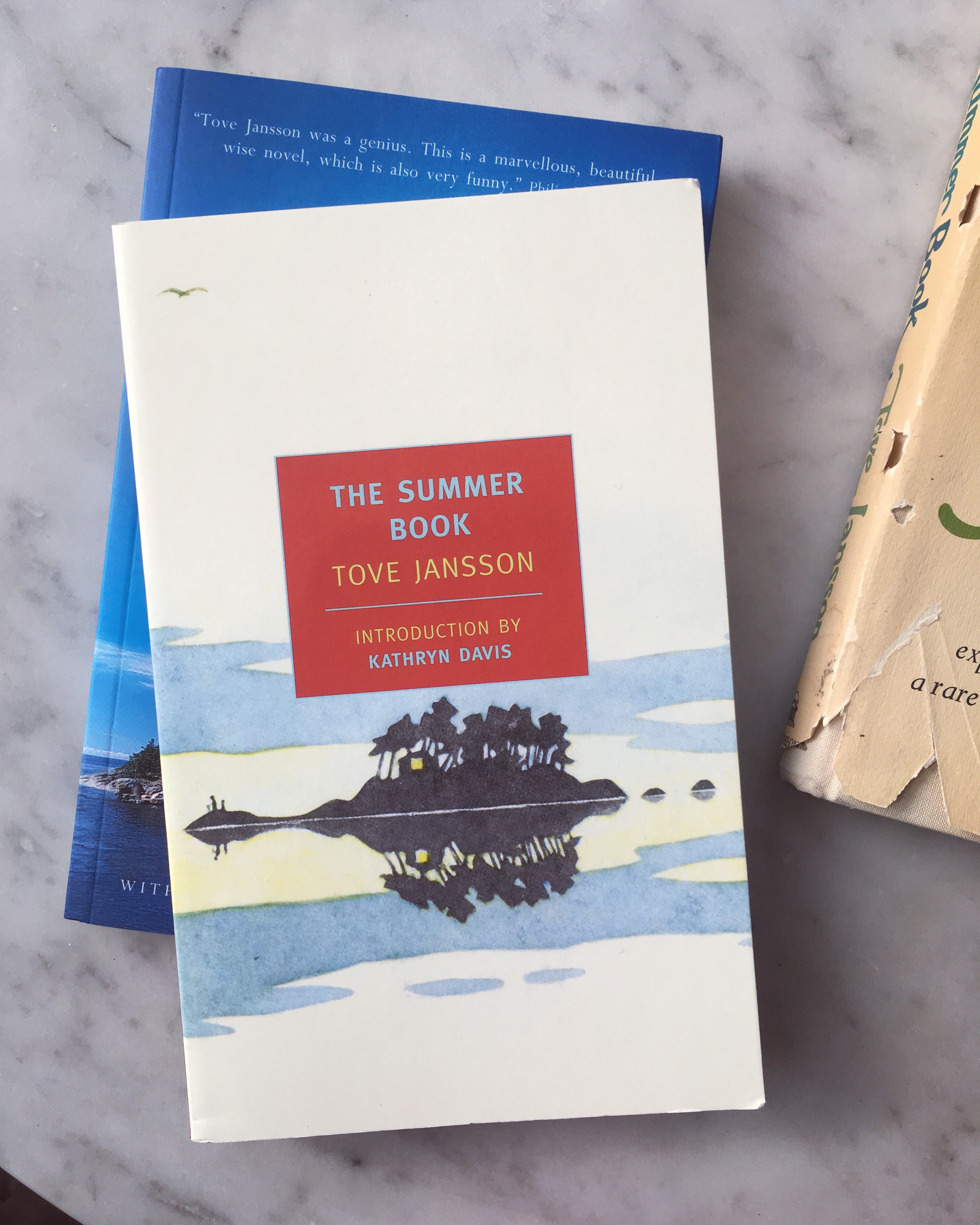
This colour photograph shows the cover of the paperback edition of The Summer Book, published by New York Review Books in 2008. The cover features an illustration of a tiny island.
Published by New York Review Books in 2008.

In her Guardian review of this glittering edition, Ali Smith touches on the incongruity of seeing a gem like The Summer Book be released into the noisy culture of what she called these chainstore times:

“What a strange media heist it all is. What a huge noise it makes. It makes a reissue of Tove Jansson’s 1972 novel The Summer Book seem like a butterfly released into a room full of elephants; it makes such a reissue – a masterpiece of microcosm, a perfection of the small, quiet read – even more of a relief.”

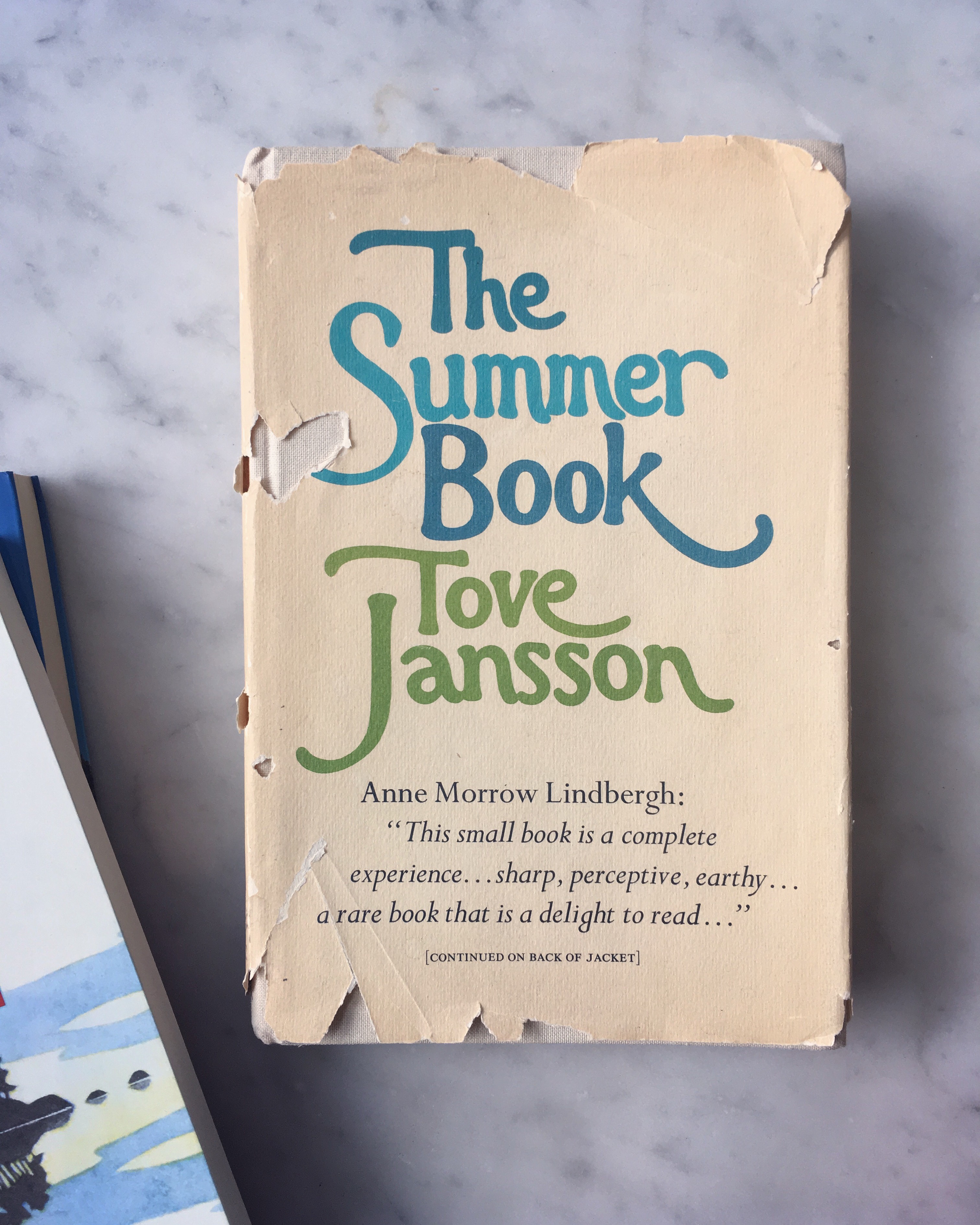
I now have three editions of The Summer Book on my shelf:

This colour photograph shows the cover of the 1974 edition of The Summer Book published by Pantheon Books. Instead of an image, the cover features the name of the book and the author in blue and green script.
Published by Pantheon Books in 1974.

While the three publishers take a different approach to their cover design, I think the “butterfly” nature of each edition is obvious.

There are no elephants here.

Tove Jansson writes with a special toughness and lack of sentiment, and with a quiet, almost drastic sense of humour about life perceived through these two people at its extremes; one just beginning, the other about to end.

Quote from Anne Morrow Lindbergh, from the front flap of the 1974 edition of The Summer Book published by Pantheon Books.

______________

The UK film adaptation of Tove Jansson’s The Summer Book will be filmed in Finland in 2019:

Six things to know about Moomin creator Tove Jansson

1. She was born in Helsinki into an artistic family on August 9, 1914.


2. She spent almost 30 summers on the tiny island of Klovharu in Finland’s Pellinki archipelago with her partner, graphic artist and professor Tuulikki Pietilä.


3. In addition to the Moomin books, she wrote novels and short stories for adults, including The Summer Book, which is widely acclaimed as a literary masterpiece.


4. Like most of us, she struggled with writer’s block.


5. She was a cat person.


6. She lived and worked in her beautiful Helsinki studio from 1944 until she passed away in 2001 at the age of 86.

Tove Jansson: A story begins

This isn’t where the story of my discovery of Tove Jansson’s work starts, but it’s where my blog begins — on a snowy Montreal day, in a small apartment overlooking Square Saint-Louis.

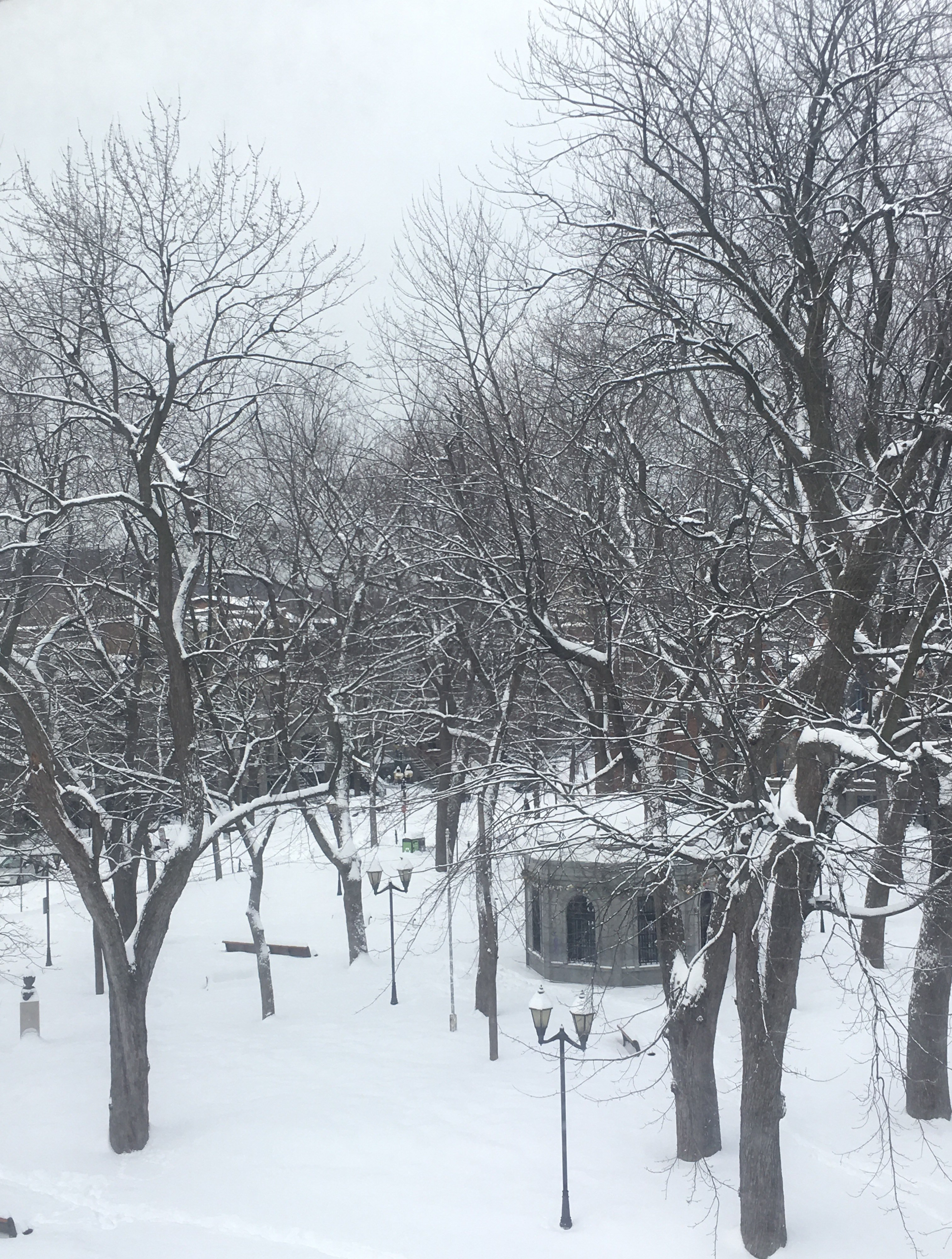
Colour photograph of Montreal's Square Saint-Louis, taken from the window of a fourth-floor apartment just after a snow storm.
View of Montreal’s Square Saint-Louis from the window of a fourth-floor apartment, just after a snow storm.

Thirty centimetres of snow have accumulated overnight, on the ground, in the trees, and on the roofs of the Victorian houses that surround the square. Since last night, I’ve been watching pedestrians walk single-file along the narrow path cleared at the edge of the square, in silence, it seems from up here.

I feel that I could look at this quiet, snow-covered corner of the Plateau-Mont-Royal neighbourhood forever, but I’m a bit of an interloper: the window is only mine for a week.

Nevertheless, I am a regular visitor to this part of Montreal, and I’m always buoyed and nourished by the vibe of the Plateau neighbourhood, which seems centred on the values of creativity and community.

These values are also at the heart of writer and artist Tove Jansson‘s personal motto: Labora et Amara: “Work and Love,” in which “work” stands for the creative endeavours that informed her life.

As long as she could draw, write and paint, and see her family and friends, she was usually content.

From The World of Moominvalley, written by Philip Ardagh
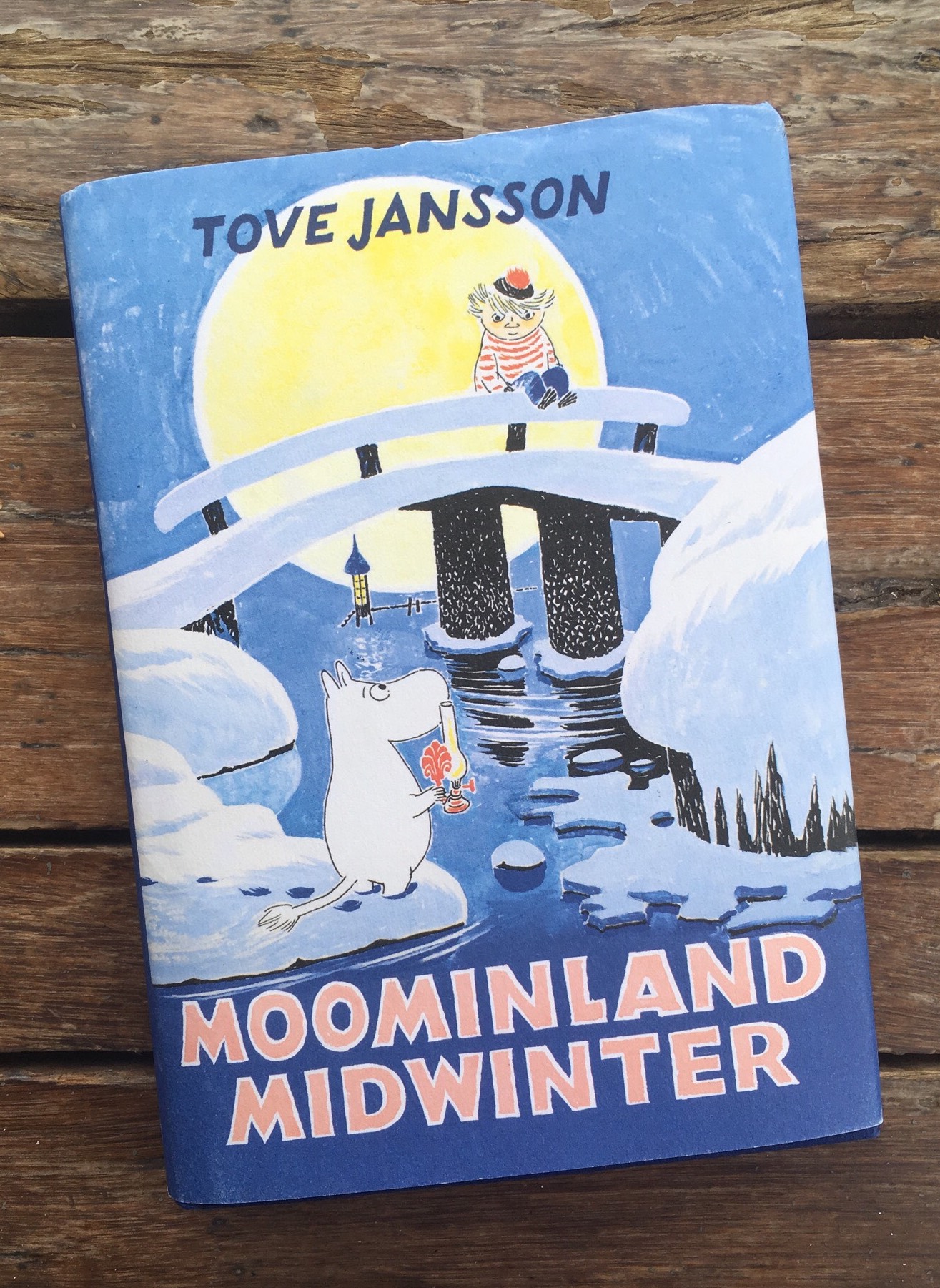
Colour photograph of the special hardcover edition of Moominland Midwinter by Tove Jansson, published by Sort of Books.
Special edition of Moominland Midwinter by Tove Jansson. Published by Sort of Books, this edition features the author’s original artwork.

As Philip Ardagh writes in The World of Moominvalley, Jansson “took pleasure in the simple things in life — a good view…a comfortable bed. As long as she could draw, write and paint, and see her family and friends, she was usually content.”

This approach to life infuses Jansson’s internationally acclaimed series of Moomin books. “Like Tove, the Moomins appreciate simple comforts and are able to find joyful moments in everyday life. Theirs is a philosophy of love and friendship above all else,” Ardagh writes.

It seems fitting, then, that one of the books I brought with me to Montreal this time around should be a copy of the special collector’s edition of Moominland Midwinter released by UK publisher Sort of Books in October 2017. This special edition was “lovingly produced” to “recreate the look that the first Moomin readers treasured” when the book first appeared in English in 1958.

The Moomins, in case you didn’t know, are kind, philosophical creatures with velvety fur and smooth round snouts, who…sleep all through the winter months, waking up when spring arrives.

From the Sort of Books website
Colour photograph of the pull-out map of Moomin Valley included in the special hardcover edition of Tove Jansson's Moominland Midwinter, published by Sort of Books.
Pull-out map of Moomin Valley included in the special edition of Moominland Midwinter by Tove Jansson published by Sort of Books.

Moominland Midwinter tells the story of Moomintroll who, in an unprecedented development, has woken up early from hibernation while his family continues to sleep.

He has never experienced winter, and “finds himself stranded and alone in a mysterious world blanketed with snow.” Gradually, with the help of a community of friends, he “overcomes his amazement and isolation and…begins to explore the glittering new landscape.”

In this book, Jansson captures the same winter magic and mystery that I am exploring in Montreal, not for the first time, but with the welcome sense of something that is never twice the same.

The great care that went into the design of this gorgeous edition of Moominland Midwinter — the beautiful endpapers, irresistible pull-out map, and pages of Tove Jansson’s original artwork — recall the very values that informed Jansson’s vocation as an artist, and that bring me back to this city.

Work and love; creativity and community.
______________

Natania Jansz, publisher at Sort of Books, talks about the craft behind the reissuing of the original Moomin books: